New Regime Spurs Oil and Gas Activity, but Hurdles Persist
By Simon West
After years in decline, Venezuela’s energy sector is starting to open up. Companies including SAL Intermarine, OEG International and KOGA Shipping explore where the opportunities lie and what cargoes are driving demand.
From Issue 3, 2026 of Breakbulk Magazine
(5-minute read)
Venezuela’s project pipeline is beginning to show signs of revival, with shippers, carriers and logistics providers all reporting an upswing in activity.
Former President Nicolás Maduro’s removal in early January has fueled expectations that renewed investment could unlock Venezuela’s vast oil and gas potential after years of mismanagement and neglect. Investor interest is also extending to pipelines and refining, as well as power generation, transmission, renewables, mining, water and sanitation, and broader construction activity to support the economy’s recovery.
_1.jpg) Fran Cruz, president of liner services at SAL Intermarine, said the company had handled just 11 shipments to Venezuela between 2020 and 2025, but had already outstripped that total in the first eight months of 2026. One sailing alone, she said, had generated more cargo volumes than all 11 previous shipments combined.
Fran Cruz, president of liner services at SAL Intermarine, said the company had handled just 11 shipments to Venezuela between 2020 and 2025, but had already outstripped that total in the first eight months of 2026. One sailing alone, she said, had generated more cargo volumes than all 11 previous shipments combined.
According to Cruz, Venezuela is undergoing a “crucial period of reconstruction,” with deliveries mainly comprising essential infrastructure equipment such as heavy machinery and construction tools. The executive has also noted this year a spike in energy initiatives, signaling new project opportunities.
“As we move forward, these developing sectors will become the focal points of our shipments, ensuring that we effectively support the country’s evolving needs and ambitions,” Cruz said.
Juan Miguel Polese, general manager of Caracas-based forwarder Venezuela International Logistics (VILCA), told Breakbulk his company had seen a 200% increase in requests over the past year, although admitted that many bids were stalled amid contractual and payment disputes, as well as compliance and legislative challenges.
“In some cases, progress has been made with bids, but we have to wait for production timelines, so we expect to start seeing those assets around mid-2027,” he said.
An Oil and Gas Bonanza?
Hydrocarbons currently offer by far the largest pool of potential cargo-carrying opportunities — unsurprising, given the scale of Venezuela’s resources.
The country holds the world’s largest proven crude reserves at an estimated 303 billion barrels, or 17% of the global total. It also sits on some 195 trillion cubic feet (tbf) of natural gas, making up nearly three-quarters of South America’s total. But production capacity has dramatically fallen over the last two decades, with output of some 1 million barrels a day a fraction of its potential.
While Chinese companies, led by CNPC, retain significant interests in the sector, Chevron remains the only U.S. major operating in Venezuela, holding stakes and production rights in major joint ventures (JVs) with state oil firm Petróleos de Venezuela (PDVSA) in the Orinoco Oil Belt and western Venezuela. European companies including Repsol and Eni have also maintained operations and, in some cases, moved to expand production.
Following Maduro’s capture, former Vice President Delcy Rodriguez was sworn in as acting president. Under pressure from the U.S., the new regime quickly sought greater economic engagement with Washington and within weeks the Venezuelan National Assembly approved a sweeping reform of its hydrocarbons law, opening the sector to private and foreign capital after more than two decades of tight state control.
Greater operational and corporate autonomy for private and overseas companies, the opportunity to negotiate higher stakes in JVs with PDSVA and a more flexible fiscal regime have been designed to lure foreign expertise and accelerate investment.
Meanwhile, the U.S. government has eased sanctions and issued licenses allowing selected energy companies to invest in and operate oil and gas projects in Venezuela. The loosening of restrictions is already starting to translate into new initiatives.
In August, BP was awarded a license alongside partners XRG and UCC Oil and Gas to develop the Loran Phase 2 offshore gas field in Venezuela’s Plataforma Deltana, with each partner holding an equal working interest. The field contains an estimated 4 tbf of recoverable gas resources.
BP’s announcement followed a series of positive statements from oilfield services firms outlining plans to expand or restart operations in the country after periods of limited activity.
SLB is working to reactivate as many as 15 oil rigs in Venezuela, with four of those potentially by year-end depending on contracts with producers, Reuters reported, while Austrian oil equipment firm SBO said Venezuela was “back on the agenda” after receiving an order to deploy its precision technology for a client in the country.
Meanwhile, Houston-headquartered Weatherford is ramping up its workforce in Venezuela on the back of conversations with customers and the expectation of new awards. Weatherford curtailed its Venezuelan operations following the introduction of U.S. sanctions in 2019, although it has retained assets in the country.
“Back in January, February, we were a little skeptical how fast this could move, but it’s moved a lot faster than people anticipated,” said CEO Girish Saligram during an August call with investors. “Our pipeline of opportunities with multiple customers is growing, and we are anticipating closing on some of these in the second half.”
According to the CEO, initial opportunities are expected to center on artificial lift, intervention and well services. The company could eventually deploy a much broader range of services, including drilling and wireline, as it did historically.
.jpeg) Daniel Mendoza, CCO at OEG International and its affiliate Orinoco Energy Group, an energy logistics platform purpose-built for the reactivation of Venezuela’s oil and gas sector, has noted a sharp increase in the level and diversity of international interest in Venezuela, mainly from the U.S. but also the Middle East and Asia.
Daniel Mendoza, CCO at OEG International and its affiliate Orinoco Energy Group, an energy logistics platform purpose-built for the reactivation of Venezuela’s oil and gas sector, has noted a sharp increase in the level and diversity of international interest in Venezuela, mainly from the U.S. but also the Middle East and Asia.
“There is natural interest from companies that already understand Venezuela and have previous experience in the country, but what has been particularly interesting is the attention from new entrants,” Mendoza said.
“Some of the conversations we are seeing involve companies and investors with experience operating in other complex energy markets. They are looking at Venezuela not only because of its resource base, but also because of the significant amount of infrastructure, equipment and technical capacity that will eventually be required to rehabilitate existing assets and increase production.”
Antero Alvarado, Caracas-based partner at energy consultants Gas Energy Latin America, said Venezuela was attracting two types of investor: smaller, more opportunistic “wildcatters” competing to secure contracts across a newly opened sector and major international oil companies (IOCs) that have until now remained on the sidelines but could bring large amounts of capital when they enter the market.
“These companies are taking more time to consider an investment in Venezuela,” he said. “Maybe they are waiting to see a change in the government after the elections in one or two years before making a huge investment.”
Fix It Before You Build It
According to Mendoza, the first wave of demand for heavy-lift and breakbulk support is expected to come from rehabilitating existing facilities and infrastructure rather than entirely new projects, as years of underinvestment have left assets in need of equipment and upgrades.
That would generate significant demand for project logistics before the market moves toward larger pipeline and infrastructure projects and, potentially, offshore developments, he said.
Houston-based KOGA Shipping, a breakbulk and project carrier serving the U.S. Gulf, Mexico, the Caribbean and South America, is delivering mainly oilfield-related cargo including drilling and workover equipment, coiled tubing, line pipe, pumps, separators and process components, as well as specialized heavy vehicles and construction and earthmoving equipment for field rehabilitation.
“That mix tells you where the country is in the cycle. This is putting existing capacity back to work, not new development yet,” CEO Juan Ignacio Lopez told Breakbulk.
While most near-term project opportunities are expected to remain onshore, larger offshore developments could potentially emerge further down the line.
Alvarado said the only “real” offshore development is the Cardón IV gas field, a JV between Repsol and Eni. The project is currently operating at roughly half its potential capacity, producing about 580 million cubic feet per day (cbf/d) for the Venezuelan market. The field is being positioned for renewed development with further drilling and infrastructure upgrades planned.
“But for that, they need more commercial terms,” Alvarado said. “A better price for the domestic market and perhaps a permit that will allow them to export the surplus production in a floating LNG (FLNG) format.”
Rebuilding Venezuela’s Power Base
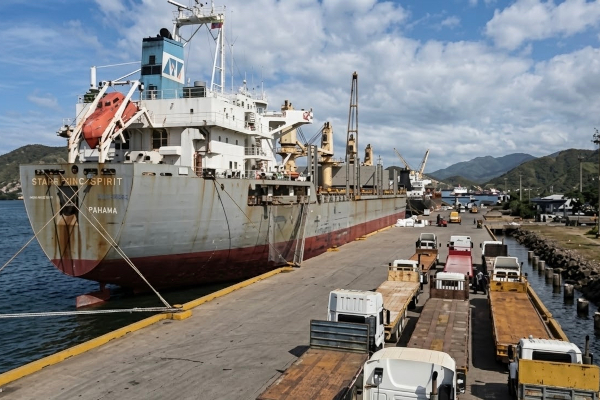 Still, the revival of Venezuela’s oil sector is already testing the country’s dilapidated infrastructure, especially at export terminals. Reuters reported that tankers were facing delays of up to 30 days because of aging equipment, outages and loading problems.
Run-down roads and poorly maintained pipelines could also limit how quickly higher production reaches new markets, while an unreliable electrical grid poses another potential bottleneck, as frequent shutdowns and blackouts disrupt oil and gas operations and other energy-intensive industries such as steel and aluminum.
The government has made efforts to address the deficit, announcing in June that energy company GE Vernova and state utility Corpoelec would work on a phased program to restore and modernize the grid. The plan aims to recover existing generation capacity, adding up to 1 GW within two years and more than 5 GW over four years.
As it stands, Venezuela is heavily dependent on hydropower with the Guri complex in eastern Bolivar state accounting for an estimated 60% to 70% of the country’s electricity. But years of neglect have left the system in a poor state.
According to Dr Andres Tremante, a professor at Florida International University’s Department of Mechanical and Materials Engineering and specialist in Venezuela’s oil and gas industry, hydropower facilities could eventually offer much-needed capacity, but restoring them would require time, money and maintenance.
In the shorter term, small natural-gas-fired power plants could provide a faster source of reliable electricity by capturing some of the natural gas being flared or otherwise lost from the oil industry. Venezuela flared an estimated 0.8 bcf/d in 2024, while total gas losses from flaring, venting and other emissions were estimated at about 1.3 bcf/d.
“We could use that gas to generate electricity and provide the local power the oil industry needs to run the pumps,” Tremante said, adding that oil companies themselves could fund such projects as the gas could effectively become a low-cost energy source for their operations.
Such a strategy would itself require significant project cargo support, from gathering systems and pipelines to compression, processing and generating units.
A Reality Check
Venezuela’s reconstruction could create significant opportunities for breakbulk and project cargo, but much work remains. While legislative measures are a step in the right direction, investors will demand guarantees that the legal and regulatory framework remains stable and predictable over a project’s lifetime.
That is before infrastructure concerns have been factored in: “Regulatory adjustments alone cannot jumpstart production if the underlying physical bottlenecks, power supply instability and supply chain deficits remain unaddressed,” Tremante said.
Lopez urged carriers and opportunistic players to treat the “gold rush” with caution.
“KOGA is carrying more into the country than we were a year ago, and what we have on the books going forward says that continues,” he said. “(But) we are coming off a very low base, so the percentages look better than the reality. In absolute terms the market is still well below where it was 10 years ago.
“Current volumes, and what we can see over the short and midterm, do not support the number of vessels and new liner services now wanting to call Venezuela. Rates have already come down significantly.”
But if all the pieces come together, Venezuela really could be on the verge of a new Eldorado.
On the Breakbulk Live Stage at Breakbulk Americas: Inland and Multimodal Logistics Across the Americas. Tuesday, Sept. 22, 12:30pm - 1:15pm.
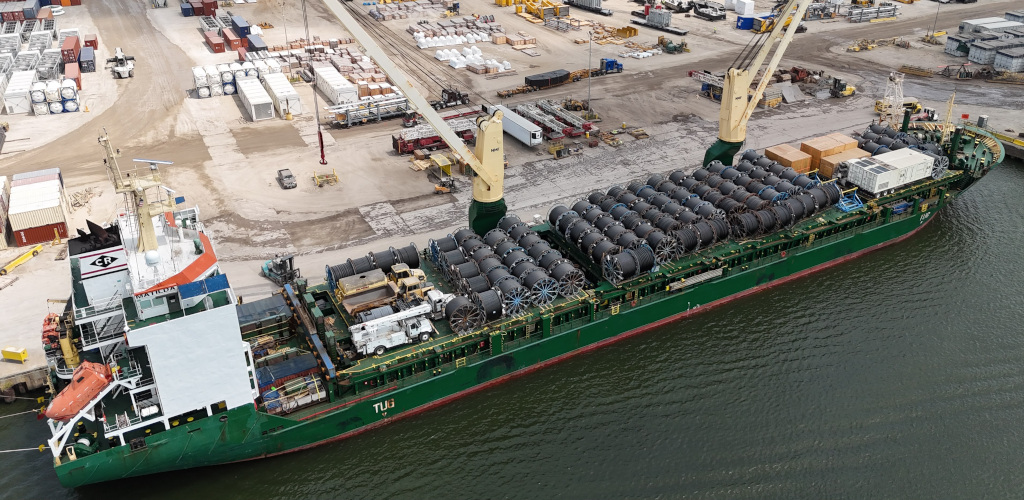
Top photo: SAL Intermarine's MV MATILDA loaded with cargo in Houston, destination Venezuela. Credit: SAL Intermarine
Second: Fran Cruz, SAL Intermarine. Credit: JSI Alliance
Third: Daniel Mendoza, OEG International, Orinoco Energy Group. Credit: Mendoza
Fourth: Vessel and terminal operations by Servicios Logísticos OCK (an affiliate of OEG International) at the Port of Guanta, Venezuela. Credit: OEG International
_1.jpg?width=330&height=227&ext=.jpg)

.png?ext=.png)






.png?ext=.png)


_1.png?ext=.png)





_1.jpg?ext=.jpg)