Industry Leaders Warn of Capacity Pressure as Demand Soars
For Breakbulk's Global Outlook 2027 series, project professionals in the Americas see rising demand driven by energy, infrastructure and industrial investments alongside growing pressure on logistics capacity and looming bottlenecks in Panama.
From Issue 4, 2026 of Breakbulk Magazine.
(4-minute read)
Q: Looking ahead to 2027, how would you describe the business outlook for the breakbulk and project cargo sector in the Americas?
Agustin Harriague, VP, Logistics and Supply Chain Operational Excellence, Mitsubishi Power:
I remain very optimistic about the outlook for 2027. We are seeing sustained investment across power generation, transmission, industrial manufacturing, LNG, mining and digital infrastructure. Demand for reliable energy continues to accelerate, fueled by electrification, AI, data centers and industrial growth. The opportunity is significant, but it will also bring greater complexity. In project logistics, certainty is becoming just as valuable as capacity. Success will increasingly depend on early planning, integrated supply chains and reliable execution.
Kevin Kwateng, heavy-lift and transport consultant, Project Logistics Engineering Solutions (PLES):
Absolutely bullish. AI is pushing power demand faster than the grid can keep up, and the entire energy chain is being rebuilt at the same time. That is not a one-year spike; it is a cycle that will run for years. Demand for heavy transport is rising across every mode, road, rail and barge. For the first time in a long time, the limit on our industry isn’t the amount of work available. It’s the capacity to deliver it.
Marco Poisler, COO, Global Energy and Capital Projects, UTC Overseas:
It’s complicated, with real upside sitting behind a logistics constraint. The Americas’ energy buildout of terminals, grid infrastructure and data centers keeps generating heavy project cargo. Panama is carrying a routing burden it was never designed to absorb alone. With Hormuz effectively closed since the war began and the Red Sea still impaired, Panama is the last major shortcut working. The National Oceanic and Atmospheric Administration (NOAA) now gives near-certain odds of a very strong El Niño by year-end.
Luis Rodriguez, director of project logistics, LATAM, Rhenus Project Logistics:
We see a positive outlook for the breakbulk and project cargo sector across Latin America, driven by continued investment in energy transition, mining, infrastructure and industrial expansion projects throughout the region. These largescale developments are becoming increasingly complex, creating greater demand for integrated logistics solutions that can coordinate multimodal transportation, specialized equipment and end-to-end project execution. We expect particularly strong opportunities in markets investing heavily in renewable energy, infrastructure modernization, mining, oil and gas, and technology-driven developments such as data centers and supporting power infrastructure. These sectors will continue to generate significant demand for project cargo expertise and tailored logistics solutions.
Q: Which sectors or specific projects do you expect to be the biggest drivers of cargo volumes in 2027?
AH: Power generation and grid infrastructure will remain among the strongest drivers of project cargo demand. Utilities continue investing in new generation assets while expanding and modernizing transmission networks to improve reliability. Beyond energy, I expect continued growth from LNG, mining, advanced manufacturing and large industrial developments. Data centers may not generate all the project cargo themselves, but they are accelerating investment across the entire energy value chain by driving unprecedented demand for reliable electricity.
KK: Data centers are the engine, and everything that powers them follows. That has created entirely new markets, led by battery energy storage systems (BESS), along with small modular reactors and a renewed push in nuclear, plus the transformers and transmission upgrades needed to connect it all to the grid. Wind and hydro remain strong, and aerospace and satellites are a growing source of oversized cargo. Each of these sectors feeds into or depends on the grid, and each one relies on heavy components that don’t fit on a standard truck.
MP: U.S. data center and power generation lead, with grid-scale batteries and transformers close behind. The Gulf crisis has pulled Asian energy buying toward the U.S. Gulf, and through Panama. In August, SK Gas paid a record US$5.3 million at auction so its liquefied petroleum gas (LPG) carrier could skip a queue of up to 11 days. That demand squeezes capacity for breakbulk and multipurpose (MPP) cargo. Rebuilding energy infrastructure, now estimated by Rystad Energy at up to US$58 billion, will add major volume once routing stabilizes.
LR: We expect several sectors to be key drivers of project cargo volumes across Latin America in 2027. The energy sector will remain one of the most significant contributors, particularly through renewable energy projects such as solar, wind and battery energy storage systems as countries continue to invest in energy transition and grid reliability. Infrastructure will also be a major source of demand, with ongoing investments in rail and road development, port expansions and urban transportation projects aimed at supporting economic growth and improving regional connectivity. At the same time, the rapid expansion of the digital economy is driving substantial investment in data centers, telecommunications networks and the power infrastructure required to support them.
Q: What do you see as the biggest challenges facing the sector over the coming year?
AH: The biggest challenge is not demand. It is execution. The industry is managing growing project volumes while navigating constraints across transportation capacity, specialized equipment, permitting, terminal infrastructure and skilled labor. At the same time, equipment continues to become larger and heavier, adding complexity throughout the logistics chain. Companies that invest in planning, engineering, digital visibility and strong partnerships will be better positioned to deliver execution certainty in an increasingly constrained environment.
KK: Everything is being stretched to the maximum. Experienced people are retiring faster than new people can be properly trained, and the work is happening now. Equipment is scarce, especially in rail. Many companies are solving both problems through mergers, acquisitions and joint ventures, buying access to trained teams and fleets rather than building them. On top of that, permitting is getting harder as infrastructure ages. There simply aren’t enough companies, people or equipment for the volume of work coming.
MP: Panama. The Panama Canal Authority cut daily transits to 34 on Sept. 3 and 32 on Sept. 15, the deepest cuts since the 2023-24 drought. Rain has since allowed a partial easing to 33 from today, but the canal says the water deficit persists. The real test is the 2027 dry season, January to May. Cargo fixed today for that window moves under contracts never stress-tested with all three shortcuts impaired at once. Who absorbs the queue, the auction premium and the Cape detour will be settled by the charter party wording.
LR: One of the biggest challenges we are facing is that regulatory and customs requirements continue to evolve across several Latin American markets, creating additional compliance obligations and potential delays if not managed proactively. At the same time, ocean freight markets remain volatile, influenced by geopolitical developments, weather-related disruptions and carrier network adjustments. This can impact both costs and schedule reliability for large-scale projects. We are also seeing constraints in some markets related to the availability of specialized equipment and heavy-haul transportation capacity, which can become critical for oversized or time-sensitive cargo movements. Infrastructure remains another challenge. While investment is increasing, port congestion and inland transportation bottlenecks can still affect project execution timelines and create additional complexity for moving project cargo. Finally, customers continue to face pressure to control costs while maintaining the highest standards for safety, compliance and operational excellence.
Q: With tariffs and trade policy reshaping sourcing and investment decisions, what impact are you seeing on project cargo and industrial projects across the Americas?
 AH: Trade policy continues to influence sourcing strategies, procurement decisions and project schedules. While companies adapt to evolving regulations, the underlying demand for energy and industrial infrastructure remains strong. We are seeing organizations place greater emphasis on supply chain resilience through supplier diversification, regional manufacturing where practical and earlier procurement decisions. Flexibility, visibility and proactive planning have become essential capabilities for managing an increasingly dynamic global trade environment.
KK: Honestly, I am not seeing a major effect overall. Some projects have taken a hit and a few no longer make financial sense under the new tariffs, so there are slowdowns in places. But there is so much work and so much potential across the Americas that, in the grand scheme of things, it doesn’t change the outlook. It’s business as usual, and business as usual right now means more than enough work to go around for everybody.
MP: Tariffs are reshaping where capital projects source equipment, and that matters for routing. More Western Hemisphere manufacturing cuts some long-haul exposure but loads U.S. Gulf ports and the canal from the south. Equipment sourced from Asia to replace Middle Eastern supply transits Panama just as transit capacity is under pressure. Trade policy is driving sourcing shifts while El Niño restricts the canal, so the projects most affected by tariff-driven reshoring are also the most exposed to the canal constraint heading into 2027.
LR: We are seeing customers diversify their supplier base and manufacturing locations to reduce risk and improve resilience, which is creating new trade lanes into the region as more equipment is sourced from alternative manufacturing hubs. At the same time, longer procurement cycles and increased regulatory complexity mean that logistics planning needs to start much earlier, with greater visibility across the entire supply chain. We are also seeing trade policy shifts drive new industrial investments and nearshoring opportunities in selected markets, particularly where companies are looking to strengthen regional supply chains and serve key end markets more efficiently. For example, we have been seeing the growing participation of Chinese investors, EPC contractors and equipment manufacturers in large-scale infrastructure, energy, mining and industrial projects across Latin America, which is influencing sourcing strategies and project execution models.
Q: What developments do you expect to have the biggest impact on the project cargo market in 2027?
AH: The continued growth in electricity demand will likely be the defining factor for our industry. AI, data centers, electrification and industrial expansion are driving unprecedented investment across the energy value chain. At the same time, digital technologies are improving visibility and planning, while sustainability and resilience continue to influence how projects are executed. The companies that will lead in 2027 will be those that combine operational excellence with long-term planning, collaboration, and the ability to adapt quickly to changing market conditions.
KK: AI and technology. Modern problems deserve modern solutions. With people and equipment stretched this thin, the real question for 2027 is efficiency: how can the same team and the same fleet do more? Tools that automate surveys, engineering and planning will let companies take on more work without compromising safety, at least until the next wave of new people and new equipment catches up with demand.
MP: The Panama Canal slot auction. Average Panamax premiums ran roughly 16 times year-ago levels in August, and the Neopanamax locks drew up to 15 bidders for a single slot. When transit is scarce, the canal allocates by price, and it now gives LNG and LPG carriers first call on canceled slots. Project cargo rarely wins that contest. The result for breakbulk is not a slower transit but no booked transit at all. The most important action before year-end is reviewing the canal-risk wording in every active and pending fixture while it can still change.
LR: We expect to see continued growth in renewable and energy transition projects across Latin America, alongside an expansion of mining activities driven by global demand for critical minerals. Significant investments in rail, road, port and urban transportation infrastructure will continue to support growth across the region, while the rapid growth of data centers will drive additional investment in power and supporting infrastructure. At the same time, digitalization is becoming increasingly important, with greater adoption of tools that provide end-to-end project visibility, cargo tracking and risk management capabilities. We also anticipate continued development of strategic infrastructure and port capacity to support large-scale industrial projects and evolving trade patterns.
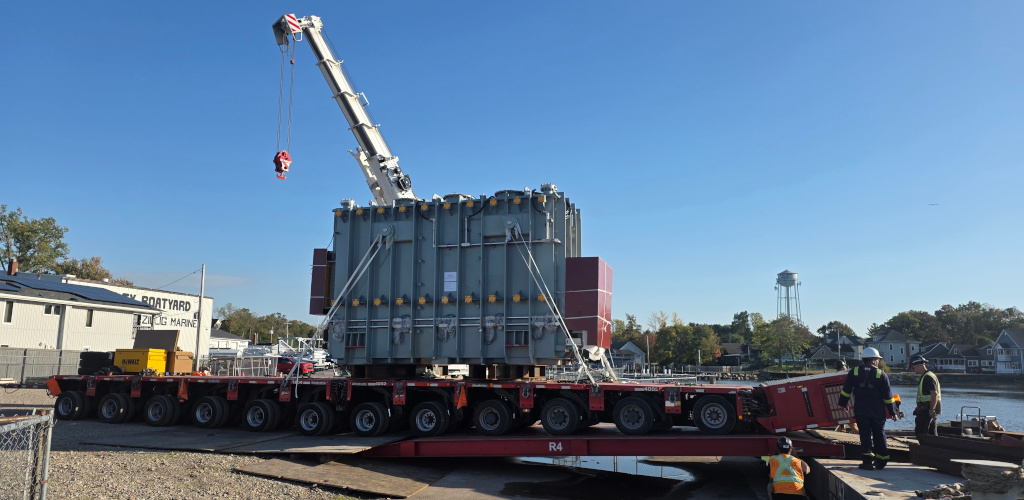
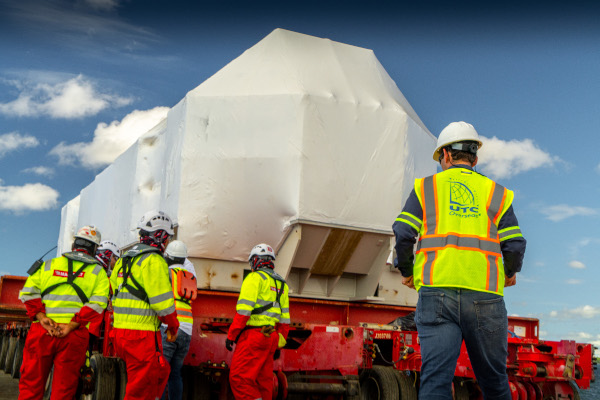
Top photo: Project Logistics Engineering Solutions coordinates the transport of a heavy transformer in the US. Credit: PLES