PCC Logistics’ Leo Lopez on Why Speed Is Beating the All-Water Route
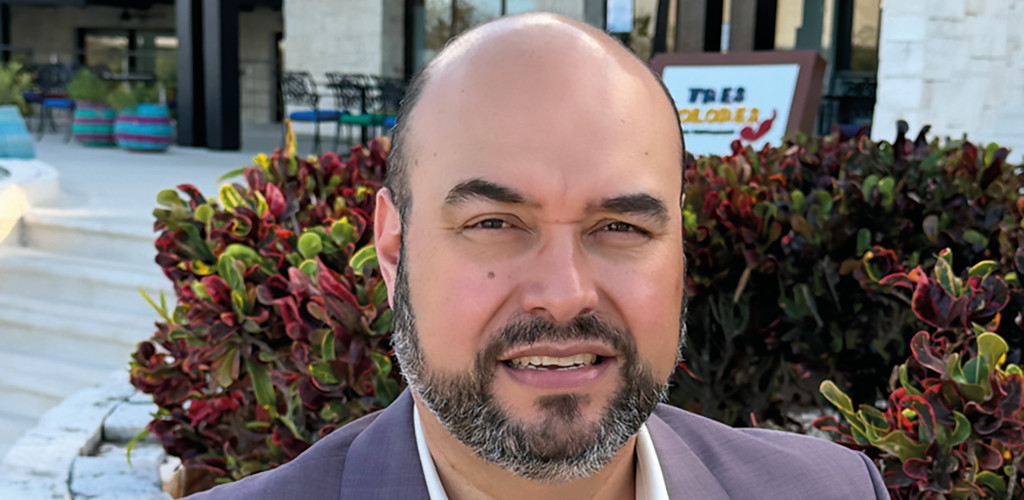
By Leo Lopez
From Issue 4, 2026 of Breakbulk Magazine
PCC Logistics has seen a significant increase in project cargo requests coming into the West Coast. The reasons will be familiar to anyone in this industry. The Red Sea situation, low water levels in the Panama Canal and the war in the Middle East have forced cargo to divert. For many of our customers, the answer has been to land cargo on the West Coast and move it inland from there.
Much of this cargo starts in Asia, as China, South Korea, Vietnam, India, Indonesia, Malaysia and Singapore continue to serve as manufacturing and export hubs for large-scale infrastructure, energy and industrial projects.
Time Beats the All-Water Route
Our customers want faster transit. When a project is waiting on equipment, they can’t wait another 15 or 20 days for it to reach the East Coast by water. So we pick it up at the port and move it across the country. Some of it goes by rail, but most of the project cargo we handle moves over the road.
Money-wise, the all-water route can be more economical in the long run. But when a product is due and a project is on a deadline, you have to speed up the timeline. That cargo was shipped for a reason, and the project can’t move forward without it.
As project schedules become increasingly aggressive, developers need logistics providers that can coordinate transportation, warehousing, staging, inventory management and site delivery with precision.
What We’re Moving
The cargo mix shows where investment in the U.S. is going. We are handling inverters, transformers and battery energy storage systems (BESS) for mining projects and data centers. A lot of infrastructure is coming back to the United States, and that is making the country stronger.
For data centers, that includes large power transformers, backup generators, switchgear, cooling infrastructure and modular data center components. Many of these assets are manufactured in Asia and exported through major gateways before arriving at project sites throughout the United States.
Mining projects located in Nevada, Arizona, Utah, Idaho, Alaska and California need oversized processing equipment, crushers, conveyors, transformers and substations. Many of these components originate from Asian manufacturers.
AI is adding to that demand. As the technology develops, I expect to see more data centers and more infrastructure built across the country. I see project cargo growing every year.
The Grid Is Next
The modernization of North America’s electrical grid remains one of the largest drivers of project cargo demand. Utilities and energy developers continue investing in high-voltage transformers, substation equipment, battery energy storage and transmission upgrades.
These projects regularly involve oversized and high-value cargo that requires transportation planning, route surveys and permitting. The result is a sustained pipeline of project cargo opportunities extending well beyond the traditional energy sector.
Moving utility transformers, BESS, generators, mining machinery and oversized modules demands extensive coordination between manufacturers, ports, carriers, terminal operators and final-mile transportation providers. As governments and private investors continue to support critical mineral development, project logistics providers will play an increasingly important role in making sure these facilities are built safely and on schedule.
Rising Costs on the Road
The past two or three months have brought new pressure from fuel charges. Many companies are seeing a big increase in the cost of moving cargo over the road, and there is a lot of discussion across the country about what can be done. Our focus is on keeping cargo moving for our customers and their projects.
Close to the Port
PCC is a family-owned company and has been in business since 1988. Under the leadership of Mike McDonnell, Brandon McDonnell and me, we support supply chain requirements across government, infrastructure, technology, mining and industrial sectors. We grew into new commodities as carriers and forwarders brought us opportunities, and we have handled breakbulk and project cargo for the past 15 years.
We are asset-based and keep our own assets in-house, offering port drayage, transload, warehousing and staging, inventory management and final mile. Our facilities sit close to the ports in Los Angeles and Long Beach along the Alameda Corridor, in Oakland and in Seattle and Tacoma. Being near the port lets us dray cargo in and out quickly and keep turnaround times short when a project is waiting.
Looking to Asia
Our growth isn’t limited to the U.S. We are building our presence in Asian and European markets, which is why I attend Breakbulk events outside the country. I want PCC to be there for the projects coming into and going out of the U.S.
Singapore is becoming a big transshipment hub, and I see more cargo coming from Asian countries. The Port of Singapore links Asian manufacturers with infrastructure, mining, energy and data center projects throughout North America. That’s why I’m looking forward to being in Singapore for Breakbulk Asia.
Leo Lopez is Vice President of Project Cargo & Operations at PCC Logistics.
Breakbulk Asia is happening in Singapore on Nov. 18-19. Find out here how your company can participate.