Los profesionales de proyectos revelan cómo adelantarse a los cambios disruptivos
Por Leslie Meredith
Desaparece un arancel y surge otro, mientras el transporte de carga de proyectos se enfrenta a las cambiantes políticas comerciales. Empresas como Fluor, DHL, Jade Management y AAL comparten las estrategias que les ayudan a controlar los costes y mantener el impulso.
De el número 2 de 2026 de la revista Breakbulk.
(5 minutos de lectura)
A pesar de lo que decían los titulares, los aranceles de Trump no desaparecieron después de que el Tribunal Supremo de EE. UU. fallara en contra de los aranceles establecidos en virtud de la Ley de Poderes Económicos de Emergencia Internacional (IEEPA) en febrero. El Gobierno actuó con rapidez para sustituir parte de los ingresos perdidos mediante otras leyes arancelarias. Con la misma rapidez, los fabricantes, los importadores y las asociaciones empresariales tomaron medidas para proteger su derecho a obtener reembolsos o impugnar los nuevos regímenes arancelarios.
La certidumbre del mercado sigue siendo difícil de alcanzar, pero los retos son evidentes. Gautham Krishnan, experto en logística de la empresa global de EPC Fluor, afirmó: «Los continuos cambios en los regímenes arancelarios y la evolución de las políticas comerciales han reducido la previsibilidad en cuanto a los precios y la disponibilidad de los materiales, lo que hace cada vez más difícil garantizar la certidumbre en cuanto a costes y plazos a lo largo del ciclo de vida del proyecto».
Aunque la reciente resolución judicial anuló alrededor del 60 % de los aranceles establecidos en 2025 en virtud de la IEEPA, el 40 % restante se mantuvo vigente, ya que se habían impuesto en virtud de fundamentos jurídicos distintos. Entre ellos se encontraba un arancel global del 10 %, impuesto en virtud del artículo 122 de la Ley de Comercio, que actualmente es objeto de litigio.
En una vertiginosa sucesión de procedimientos judiciales, el Tribunal de Comercio Internacional de EE. UU. dictaminó el 7 de mayo, en una resolución de 2 a 1, que el arancel previsto en el artículo 122 era ilegal, aunque la reparación se limitó a tres demandantes concretos; las reclamaciones de los demás fueron desestimadas porque no pudieron demostrar un perjuicio económico directo para ellos mismos como importadores. Posteriormente, el Tribunal Federal de Apelación suspendió (paralizó) la orden el 12 de mayo, por lo que la Oficina de Aduanas y Protección Fronteriza (CBP) sigue recaudando los aranceles de la Sección 122 a todos los importadores mientras se tramita el recurso de apelación. Este arancel concreto es temporal y expirará el 24 de julio, a menos que el Congreso lo prorrogue.
Esa situación provisional no ha contribuido en gran medida a tranquilizar el mercado. Se pide a los equipos de compras que tomen decisiones de abastecimiento para proyectos que se prolongarán durante años, mientras que las estructuras arancelarias pueden cambiar en cuestión de días. El entorno actual se ha convertido en un sistema de «paga ahora, litiga después», en el que los importadores se ven a menudo obligados a asumir los aranceles por adelantado, mientras que los recursos judiciales avanzan lentamente por el sistema.
Las devoluciones suponen una complicación adicional
La cuestión de las devoluciones se está convirtiendo en una fuente de confusión en sí misma. Tras la sentencia del Tribunal Supremo, las empresas que pagaron los aranceles de la IEEPA comenzaron a buscar formas de recuperar dichos derechos. La CBP ha ido desarrollando un proceso de devolución a través de CAPE, su sistema de «Administración y Tramitación Consolidada de Entradas», mientras que los importadores y sus abogados valoran si presentar reclamaciones administrativas, demandas ante el Tribunal de Comercio Internacional o ambas cosas.
La devolución no se abona automáticamente a la empresa que, en última instancia, asumió el coste. Por lo general, se rige por la declaración de aduana, lo que significa que el importador registrado o su agente autorizado es quien está en condiciones de solicitar el reembolso. En el caso de la carga de proyectos, podría tratarse del propietario, el proveedor, la empresa EPC, el distribuidor u otra parte contratante, dependiendo de cómo se haya estructurado la transacción. Esto hace que la redacción del contrato y los registros de la declaración de aduana sean más importantes que nunca.
Se disparan los aranceles sobre los metales
Pero es la modificación de los aranceles de la Sección 232 sobre el acero y el aluminio lo que podría afectar más gravemente a los presupuestos de los proyectos. Cuando Carga general El pasado mes de julio se realizó una encuesta a diez altos cargos del sector sobre las políticas federales que más influyen en los proyectos, y los aranceles sobre los metales obtuvieron una ventaja considerable. Y estos aranceles acaban de subir considerablemente.
Hasta principios de abril, el acero, el aluminio y el cobre utilizados en equipos eléctricos y otros productos industriales estaban sujetos a un arancel del 25 %. Tras declararse ilegales los aranceles de la IEEPA, el Gobierno amplió el alcance de la Sección 232 para que el arancel pudiera basarse en el valor total del producto, y no solo en el valor de los metales que contenía, siempre que estos representaran más del 15 % del peso total del producto.
Este cambio tiene una gran repercusión en la carga de proyectos. Tomemos como ejemplo un transformador de 250 000 dólares que pesa 27 000 kilogramos, del tipo que se utiliza en una subestación de tamaño medio. Su acero y cobre tienen un valor aproximado de 45 000 dólares y representan el 25 % de su peso. Antes de la ampliación del 6 de abril, el importador habría pagado 11 250 dólares en aranceles, calculados sobre el 25 % del valor de los metales. Tras el cambio, el arancel se disparó hasta los 62 500 dólares.
Estrategias de aprovisionamiento redefinidas
 Los responsables de los proyectos se están tomando un respiro para volver a hacer cálculos. «Cada proyecto es diferente; sin embargo, hemos observado retrasos a medida que los proyectos reevalúan los costes y determinan si deben cambiar su estrategia de abastecimiento para hacer frente al nuevo panorama arancelario», afirmó Jake Swanson, director comercial de DHL Industrial Projects.
Las navieras están observando la misma reacción por parte de los propietarios de la mercancía. John Pittalis, responsable de comunicación de la empresa AAL Shipping, con sede en Singapur, afirmó que el aumento de los aranceles sobre los productos fabricados en China, «incluidos los equipos industriales, el acero y los componentes para energías renovables, junto con los cambios en la normativa de importación», han llevado a los clientes a «reevaluar los lugares de abastecimiento, los plazos de adquisición y las rutas de transporte».
Las fluctuaciones arancelarias también están cambiando la ecuación para los equipos de compras. Krishnan afirmó que Fluor está respondiendo en tres frentes: un «modelo de abastecimiento al mejor coste» que sopesa el coste total en destino —incluidos los aranceles, la logística, la capacidad de los proveedores y la flexibilidad en los plazos— frente a la certeza en la ejecución; cláusulas de variación de precios con los proveedores para reducir las contingencias iniciales; y operaciones de cobertura.
El lado positivo
Grant Wattman, presidente de Jade Management, una consultora especializada en logística de proyectos, afirmó que los aranceles han «acelerado la necesidad de actuar con agilidad y contar con alternativas preparadas de antemano, lo que incluye incluso acelerar los plazos de ejecución de los proyectos».
Los transitarios también están viendo las ventajas. «Desde el punto de vista de un transitario, esto nos ha permitido ofrecer soluciones adicionales a nuestros clientes», afirmó Swanson. «En algunos casos, podemos colaborar con ellos en una fase más temprana, cuando están tratando de determinar cuáles son sus mejores opciones de abastecimiento, ayudándoles a analizar sus costes totales en destino».
Este cambio implica que los proveedores de servicios logísticos están simulando activamente escenarios alternativos de abastecimiento, calculando la exposición a los aranceles y planificando rutas alternativas para adelantarse a los retrasos antes incluso de que una sola pieza de equipo salga de fábrica, lo que añade nuevas dimensiones a la gestión de riesgos.
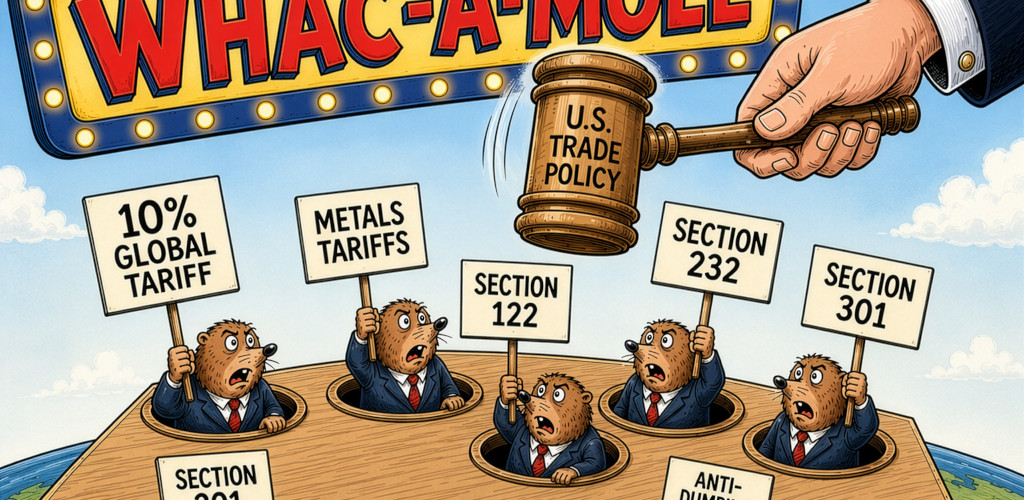
En el caso de la carga de proyectos, el problema del «juego del topo» se ve sin duda agravado por el número de aranceles en vigor, pero también por la rapidez con la que una resolución o una autoridad sustitutiva puede modificar la base de cálculo del coste de un equipo que quizá ya se encuentre en el mar. En este contexto, una coordinación más estrecha entre los contratistas EPC, los transitarios y los transportistas se ha convertido en una necesidad, y no en algo meramente recomendable.
La incertidumbre en materia de política comercial será uno de los temas que abordará el ex embajador neerlandés Ron Keller durante su ponencia principal en Breakbulk Europe 2026. «El fin de la previsibilidad: la geopolítica y la nueva realidad del comercio mundial» tendrá lugar en el Breakbulk Live Stage el martes 16 de junio, de 11:45 a 12:20.
Foto superior: Imagen de «Whac-a-Mole» generada por ChatGPT
Segunda foto: Jake Swanson, de DHL Global Forwarding
_1.jpg?width=330&height=227&ext=.jpg)


.png?ext=.png)






.png?ext=.png)



_1.png?ext=.png)





_1.jpg?ext=.jpg)